
Can’t Sleep? 3 Common Sleep Problems

Do you ever feel like the darkness of the bags under your eyes are like the rings of a tree, but your face is telling people how many years you’ve gone without good sleep?
In our overscheduled, race-around lives, sleep is a unicorn. We all know how much better we’d feel if we slept more, but we seem entirely unable to make it happen.
Sleep is the keystone for your overall health and wellness. Learning to prioritize sleep and setting yourself up for sleep success can massively boost to your quality of life.
This post contains affiliate links. As an Amazon Associate I earn from qualifying purchases. Purchasing via these links gives me a small commission at no cost to you. Please see my privacy policy for more information.

Can’t sleep? You’re not alone. There are three common contributing factors that make sleep challenging for many people.
“I Can’t Sleep” Reason #1: BLUE LIGHT

The first sleep obstacle is a relative newcomer to the bedtime disruption scene. The awesome technology that we have like smart phones, laptops, and e-readers– most of these devices are emitting blue light. But why is blue light such a big deal?
To think of this in terms of brain chemistry, we can think of it this way: We are all hard wired, as human beings to have a circadian rhythm. The circadian rhythm is our natural sleep and wake cycle.
Sleep researchers and chemists, like Brian Zoltowski from SMU, have found that the blue light emitted from the screens is the same wavelength of light that is emitted and most prevalent in sunlight at the beginning of the day. That means the light coming from our devices is sending cues to our brain that say “wake up.”
This happens because as the light comes in to our eyes, the cells behind our eyes that are collecting the light send the message to your brain to wake up. So if you’re lying in bed and using your screen to wind down, you’re actually winding yourself up.
What we really need to be doing before bedtime is to have more red light. That’s the wavelength of light emitted at dusk. And that’s the wavelength that when collected by the cells behind your eyes tells your brain to shut down.
When we can better honor the innate circadian rhythm of waking and sleep cycles, we’re going to have better quality sleep. Fortunately many newer devices have blue light blockers built in. Check the settings of your device to see if you can set a blue light blocking timer. If your device doesn’t have a blue light blocker and you’re not willing to find a new wind down activity, a pair of blue light filtering glasses will help reduce the effects of blue light on your brain.


“I Can’t Sleep” Reason #2: ERRATIC SLEEP SCHEDULE

If you’re like most people, your sleep schedule doesn’t have much of a schedule. It’s erratic. There are a lot of common reasons as to why people don’t adhere to a sleep schedule.
- Do you work the night shift?
- Do you pay strict attention to your bedtime?
- Have you ever Netflixed just one.more.episode before going to bed?
- Is your partner a night owl and you’re an early bird (or vice versa)?
In addition to those factors that contribute to an erratic sleep schedule, I’m going to guess that there are at least a few nights a week you stay up later than you really mean to. This makes you fabulously normal. But it also makes you tired.
If you have erratic going to bed and waking up times, you are fighting your body’s circadian rhythms. Your body likes patterns. Your body likes predictability. It knows if you eat at a certain time and then you wind down and then it’s time to sleep, your body can fall into a deeper sleep more quickly. That deeper sleep is more restorative, so when you wake you are better rested.
And if you can wake up at the same time every day, you’re going to eliminate that groggy Monday morning feeling most people have. (Even when it’s not Monday.) Abiding by regular sleep and wake times for yourself is a way to fine tune and honor the circadian rhythm that is already plugged in your brain and hard wiring.
The key to overcoming erratic sleep and wake times is to set a sleep schedule. This is much like a child who has a bedtime routine followed by a set bedtime. And while it can be a challenging habit to establish, the rewards are worth it.
Try one of these three Bedtime Routines to help you fall asleep tonight!
You owe it to yourself to give a bedtime routine a try for five nights in a row. Just see how much better you feel when you go to bed and wake up at consistent times. Your body will thank you!
Warning: establishing a sleep schedule can be life-changing!
“I Can’t Sleep” Reason #3: HORMONES
If you’re riding the hormonal rollercoaster of perimenopause, disrupted sleep may be one of your biggest symptoms. As hormones like estrogen and progesterone fluctuate during perimenopause, sleep disturbances are noted to increase. This is due to hormonal symptoms like night sweats.
Night sweats not only wake you up, but they can keep you up. Changing your pajamas, changing your sheets, and BOOM, you’re wide awake again. Getting your hormones balanced to eliminate night sweats is essential.
But it’s not just the reproductive hormones that affect your sleep. Hormones like cortisol, a stress hormone, also contribute to quality sleep. If you’re one of those people who experience night wakings or insomnia, research indicates this could be due to elevated levels of cortisol.
And while it may seem like hormones are way harder to control than limiting blue light exposure and setting a sleep schedule, it can be done. Reducing stress is important for lowering cortisol in the body that could make sleeping difficult.
Because cortisol pairs with insulin as part of the natural blood sugar wave, eating a small high-protein snack just before bed can help stabilize your blood sugar as you sleep. This means your body won’t experience a middle-of-the-night cortisol spike that wakes you up (and keeps you up).
CONTROL WHAT YOU CAN
In dealing with sleep challenges and attempting to create better sleep practices, control what you can. Fortunately, there are three easy things that are easy to control and can help you have deeper, more restful sleep.
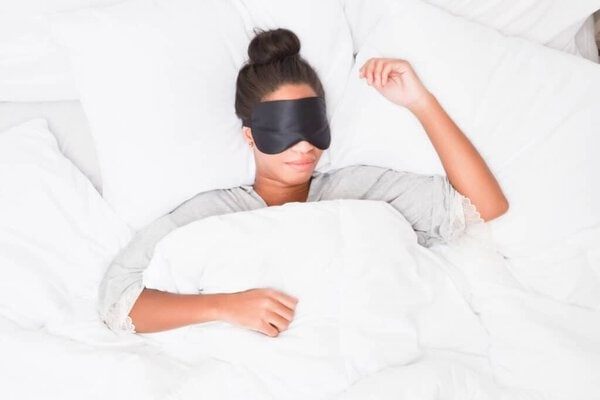
- Room temperature
Adjust the room temperature slightly cooler than what feels comfortable when you go to bed. If you share your bedroom, have a conversation with your partner about what temperature is comfortable for you when you sleep. Avoid the battle of the thermostat by talking about it before going to bed.
- Pajamas
Wearing pajamas made of silk or wicking materials are a great choice, particularly for women in perimenopause. If you suffer from hot flashes or night sweats, keeping cool is essential to getting a good night’s sleep.

- Pillow
It may seem a bit silly to suggest it, but is your pillow actually comfortable? How old is your pillow? Maybe it’s time to try a new pillow or a different type of pillow to see if that can help you get better, more restorative sleep.
By changing these simple factors of your sleep environment, you can improve the quality of your sleep. Add that to the new healthy sleep habits you adopt, and you certainly will sleep better. Deeper, more restful sleep will have a positive ripple effect throughout other parts of your life.
Think of all the things you’re able to accomplish now. Imagine all you could do—and feel good while doing them—if you were truly well rested!
The Well Balanced Women blog is for educational purposes only and is not medical advice. Please discuss your health issues with a licensed medical practitioner.

2 Comments
Submit a Comment

I'm a Women's Wellness Warrior who is committed to helping women find realistic, sustainable solutions to creating a healthy lifestyle that works with their real life.
Whether you're looking for a health coach, fitness & wellness ecourses, or a public speaker or podcast guest, I would be honored to walk with you on your wellness journey.
As a mom, sleep has been so hard for me the past few years. I am going to try some of these tips out ASAP! Thank you so much for sharing!
Josephine | Better as Us
betterasus.com
I hear you, Josephine! All three of my kids were bad sleepers, so I had a full decade without sleep. Wow it makes life rough! Control what you can, and let go of the rest…