
5 Habits to Track to Create My Healthy Life
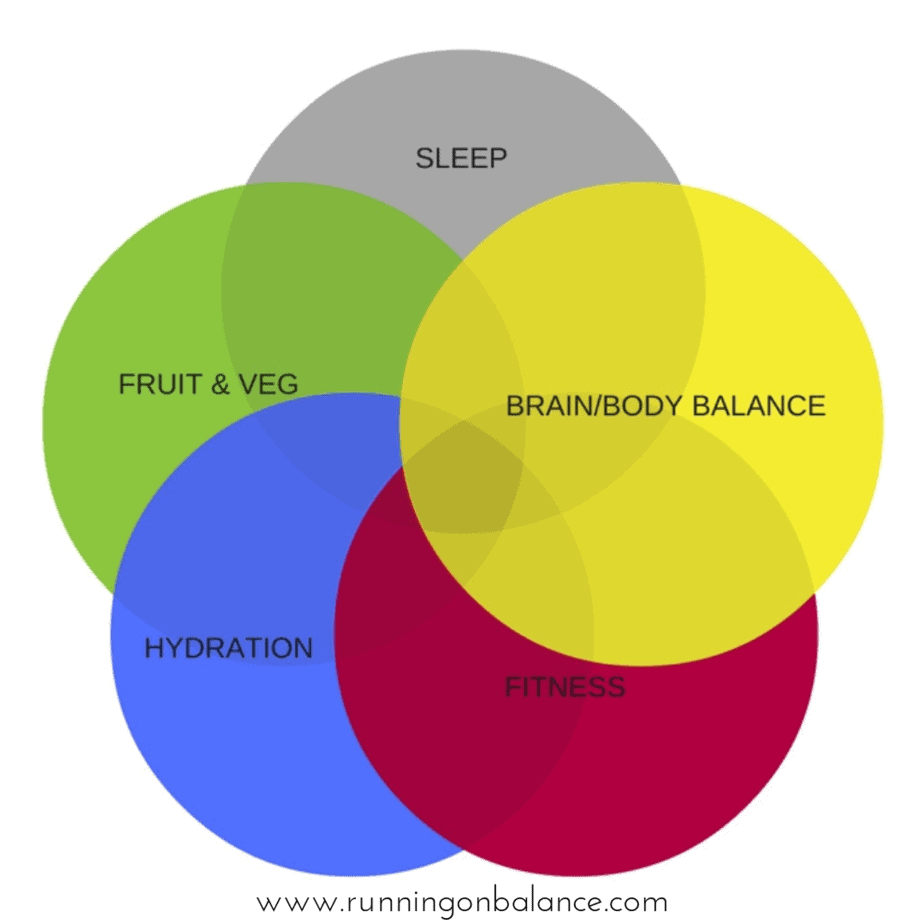
My healthy life is pretty simple. I eat well, move regularly, drink plenty of water, get quality sleep, and love the quiet pockets of time I insert throughout my day. When people ask what habits to track to build a healthy lifestyle, I give them my top five:
- Hydration
- Daily Steps
- Fruit & Vegetable Consumption
- Sleep
- Meditation/Quiet Time
If you want to emulate my healthy life, start with these basic five habits to track.
This post contains affiliate links. As an Amazon Associate I earn from qualifying purchases. Purchasing via these links gives me a small commission at no cost to you. Please see my privacy policy for more information.
Getting into the habit of tracking healthy habits can be a challenge in and of itself. Using a habit tracker can help you succeed. Whether you are more drawn to using an app or using a paper habit tracker, having a reliable method to hold yourself accountable (and see your progress!) is key to your success.

Remember that when building healthy habits we are working toward the positive. We want to create a healthy life based on the things we DO, not the things we don’t do. That is a subtle but important mindset shift from much of the popular diet and fitness culture.
Let’s take a look at the 5 habits to track for my healthy life.
HYDRATION

Hydration is important because it affects our bodies on an elemental, cellular level. Our bodies are mostly water! And the proper balance we keep between water, electrolytes, and nutrients, that’s what really determines how most of our bodily systems function.
Everything from our nerves to our muscles all relies on our body being well hydrated.
The good news is that drinking 8 glasses of water is just a hydration myth. Your body gets water from fruits and vegetables as well as drinking it straight.
But how much water is enough? The easiest way to test is to check the color of your urine. It should be a pale yellow.
Need help remembering to drink more water? Try carrying a water bottle around with you. The LARQ water bottle has a built-in bacteria killer, so you can know the water you are drinking is healthy. You can also use a cue to remind you to drink more water. Maybe you have a drink every time you check your phone. That would bump up your hydration levels, for sure!
Keep yourself well hydrated by including water consumption as a habit to track every day.
DAILY STEPS

For most people, walking is the most easily accessible form of exercise. You don’t even need to think about “going for a walk” for the movement to add benefit to your life. Simply getting more steps in each day can help create my healthy life.
Here’s the good news: 10,000 steps a day was never meant to be the standard goal for every person on the planet.
The reality is, step counting is nothing more than a clear, easy-to-measure metric of how much movement you’re getting in a day. While 10,000 steps a day is an easy number for people to remember, it’s not necessarily the right goal for everyone.
Some people may already be walking (or running or ZUMBAing) 10,000 steps a day. For those people, the metric doesn’t make them move more. For the group of people who currently move only 1500 steps a day, setting a goal to get to 10,000 is completely unrealistic in the short term. It may even be dangerous.
That said, study after study proclaims that sitting is the new smoking. That means the more movement we get in a day, the better. Counting daily steps is the easiest way to measure (and hopefully improve) that amount of movement. But setting a realistic and appropriate goal for each person is key.
I suggest tracking your daily step count for a week. A realistic goal would be to increase your average daily steps by 5% each week.
The best part is that counting daily steps is not an expensive undertaking. While having a smartwatch has all the cool bells & whistles of fitness tracking built in, a simple and inexpensive pedometer will do the work just fine. (If you are someone who carries your phone with you everywhere, you could even use an app on your phone.)
If you like tech gadgets, the options for fitness trackers is seemingly endless. Consumer Reports has an extensive guide that describes all the possible options.
Whatever you use to track your daily steps, knowing this baseline benchmark of fitness can help you create my healthy life.
FRUIT & VEGETABLE CONSUMPTION

Counting how many servings of fruit and vegetables you eat in a day is straightforward. Government health recommendations suggest eating five servings of produce per day. My healthy life habit to track is higher—NINE servings of fruits and vegetables a day …..
How much is a serving? Here’s what the American Heart Association has to say about that.
If the idea of eating nine servings of fruits and vegetables a day scares you, start smaller. Keep a food diary for three days to get a sense of how much produce you are eating now. Over the next week, can you increase your fruit and veg consumption by one serving a day?
If you’re stuck for ideas about up your produce servings, my blog post five easy ways to eat more fruits and vegetables has several realistic strategies for you to try.
It is also worth tracking how you feel as you increase your fruit and vegetable intake. Your body may be surprised by the fiber rush, so make sure you are drinking plenty of water to keep your intestines moving!
Fruit and vegetable consumption might seem like an odd habit to track, especially when so many diet fads seem really complex. And that’s kind of the point. We aren’t looking to eliminate any foods. All we want to do is eat more of the nutrient-dense produce that will fill you up. Hopefully, that will crowd out some of the less healthy things you’re eating.
SLEEP

Sleep is the missing link in most peoples’ wellness puzzle. Adding sleep as a habit to track can shift your mental and physical health.
Most people notice that when their sleep suffers, they have a lack of concentration or brain fog type of feeling. Without proper rest, the brain is unable to function at its highest level.
Lack of sleep also contributes to a loss of coordination. Maybe you haven’t had a lot of sleep, so the next day you’re walking through the day feeling really clumsy. There is a direct cause and effect! The brain can’t send the messages through the nervous system fast enough to get to the muscles so they can work in their most optimal way.
Did you know that sleep also affects your immune system? Remember when you had the flu and it brought that feeling of being so tired that all you can do is lay on the couch? That is your body telling you: “I NEED DOWNTIME. I need to repair. I need to send all of your energy into your body to fight what is making you sick.”
Also, when you are sleeping your body is doing things like muscle repair. If you’ve ever had a tough workout and your sore, your body is knitting all those muscle fibers back together when you sleep. In order to bolster your immune system, your body also releases human growth hormone while you’re sleeping. This is what helps you build muscle and boost your metabolism.
In adulthood, there is a tremendous link between weight loss and sleep. It’s all interconnected! We want you to be able to keep up with your fitness– so you get enough sleep, you have more energy, you make sure to do your workout, you control your weight, then you sleep better. Building the habit of quality sleep creates a really positive cycle.
How much sleep each person needs is highly varied. Studies do indicate that fewer than six hours of sleep per night correlates with obesity and other health concerns. If you struggle with sleep, check out these 3 common sleep problems (and how to address them).
MEDITATION or QUIET TIME

When we have repeated events that create stress day after day, we have a cascade of negative health effects. Everything from belly fat– they type that covers your internal organs an contributes to chronic health issues like heart disease– to memory loss, sleeplessness, or the feeling like you’re riding an emotional rollercoaster is all connected to stress.
We live in bodies that are tired and are asked to do more and more every day. If you feel like you just want to run away from your life, you’re not alone.
Most of us don’t have that luxury, though. Instead, we can introduce meditation or daily quiet time as a way of carving out an island of peace in the ocean of our busy life.
Why would we want to try meditation or quiet time? Scientific studies indicated that positive thoughts can actually improve our physical health. The best way for us to create these positive thoughts is to give ourselves distance from the daily grind.
Meditation doesn’t have to be a long, formal process. A simple act of sitting still and breathing deeply and fully for a few minutes can provide meaningful benefits. It will rev up our parasympathetic nervous system. This means we can tap into the part of ourselves responsible for rest and digest activity. Even better, it gives our sympathetic nervous system—the one responsible for flight or fight hormones—a much-needed break.
When you find yourself riding a carousel of negative chatter, know that you have the power to HOP OFF. Using a personal mantra can reshift your focus and bring you back to the positive.
If you’re a busy mom with someone always asking you to do something, adding quiet time as a habit to track can unleash a powerful change in your life. Start small—just a minute or two a day—but when you get a little time and space to breathe deeply, you will likely notice benefits that will make you want to do more.
Meditation also has powerful benefits for women in perimenopause.
My healthy life is based on these five habits to track. It can work for you, too! Knowing how well you are doing sticking to these healthy habits gives you both feedback and motivation to make choices that build the life you want.


0 Comments