

If you’ve been struggling with your energy levels, gut health, bowels, or weight, take a look at your diet. What you are eating is very likely directly affecting how you feel.
Eating more fruits and vegetables every day helps to nourish your body by providing essential vitamins and minerals. They are an inexpensive way to give your body the building blocks it needs to keep you healthy and strong. Fruit and veg are also delicious ways to get more fiber into your diet which keeps your body working efficiently.
Fortunately, there are very easy ways to eat more vegetables and fruits. No need to reinvent your diet.
It’s simple math: eat more produce to produce positive health results!
This post contains affiliate links. As an Amazon Associate I earn from qualifying purchases. Purchasing via these links gives me a small commission at no cost to you. Please see my privacy policy for more information.
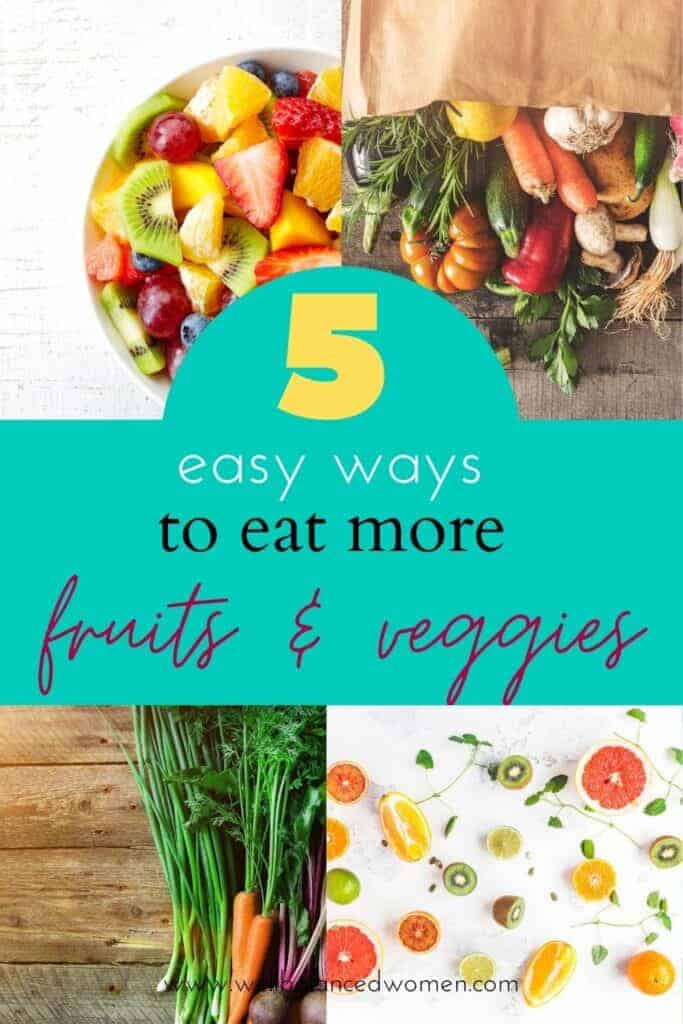
Try these five easy ways to eat more fruits and vegetables
- Increase your fruit and vegetable intake at meals

The great news is that you don’t have to to change the way you cook in order to eat more fruits and vegetables. Instead, you’re simply going to increase the portion of your plate that holds these nutritional nuggets while decreasing the portions of other foods on your plate.
Aim to fill half your plate with produce (and aim for more vegetables than fruit).
By increasing your fruit and vegetable intake at meals, you can still enjoy the foods you love….just in smaller portions.
Making the produce the star of the show is one of my tips in Ten Ways to Eat Less at Mealtimes.
- Eat fruits and vegetables as your snacks
Produce is now your go-to snack option! Reduce the consumption of other types of foods and replace those snack foods with produce. By choosing fruits or vegetables as your snack, you crowd out the less healthy (and usually more processed) options.
Having your produce snacks prepped and ready to grab is key to making them the easy choice. Having the right tools makes prep work a breeze. Make sure you have:
- a quality peeler
- a good sharp paring knife
- plenty of cutting boards
- colanders for washing your produce
Use glass storage containers to hold your produce snacks. When you open your refrigerator and see stacks of colorful fruits and vegetables, it makes them so much more appealing!

Vary your snacks of sweet fruit with crunchy vegetables. To keep your blood sugar balanced after snacking, eat your produce snack with a small protein hit, too. (A handful of almonds or a spoonful of peanut butter or a hard-boiled egg are all healthy options.)
- Eat the rainbow every day
Eating a variety of fruits and vegetables that are different colors increases the nutritional profile of your diet. Every color you eat contributes a different, necessary vitamin and mineral content to your diet.
Thinking about all of the different colors and produce options is a fun way to stimulate your appetite and interest in making the shift to eating more produce. It’s a great way to start brainstorming meal ideas.

“Eating the rainbow” can be a fun strategy to involve young kids who need to increase their produce consumption as well. Let them pick a different color food to try each day. Using a spiralizer also makes eating vegetables more fun. Seeing the rainbow of different colors and shapes of vegetables makes them more enticing!


- Target specific nutrients/vitamins you know you’re deficient in
I encourage you to eat the widest array of fruits and vegetables not only because their colors stimulate your appetite for them but you’ll also be more likely to eat produce containing nutrients your body needs.

For example, Vitamin D is a common deficiency, especially in women. Knowing why Vitamin D is important for women and that there are easy ways to boost Vitamin D levels is a great way to start thinking about eating for specific nutrients.
Variety is the most sustainable way to rectify nutritional deficiencies so you don’t get palate burnout. That means giving your body a wide variety of fruits and vegetables so you don’t get tired of eating them. Instead, the different options will help build up your nutrient stores which improves your overall health.
- Implement my SAD makes me HAPPY strategy
SAD= Smoothie A Day or SALAD A DAY
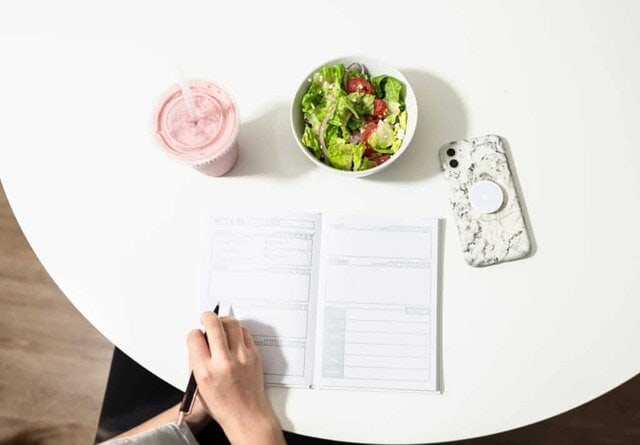
One meal each day can be a salad or a smoothie. By eating a meal that is wholly produce, you’ll skyrocket your produce consumption.
The SAD approach is perfect for people who think they can’t cook. There is no cooking required! It’s just combining different fruits and vegetables! The ingredient variety for both salads and smoothies is practically endless.
Once you start thinking beyond that sad iceberg lettuce with a slice of cucumber and a single cherry tomato, salads get so much more interesting! Think of the ingredients as building blocks. Use a green or whole grain as a base. Add in three to five other fruits or vegetables. Make sure you have some healthy fat like avocado, olives, or nuts. Seeds are an easy protein punch. Boom! Done!
Smoothies are also easy. Melanie at Mostly Under Control has a great guide to making smoothies that will tempt even the pickiest eater into getting more fruits and veggies into your body. Her options are super kid friendly, too.


Both salads and smoothies are an easy way to increase fruit and vegetable intake. And by including a wide variety of fruits and vegetables, you increase the nutrients your body is getting. Combining fruits and vegetables in smoothies and salads also helps train your palate to enjoy– and even crave– those fresh flavors.
All those fruits and veggies will pack a happy nutritional punch into that one SAD meal.
What are the benefits of eating healthy?
The benefits of eating healthy by increasing your fruit and vegetable consumption are nearly endless!
Here are five clear reasons eating more fruits and vegetables is good for your health:
- Improved immune system response
- Better mental focus and clarity
- Smooth digestion and elimination (which also keeps your mood elevated and stable)
- Healthy skin, hair, and nails
- Reduced inflammation throughout the body
Each of these benefits of eating healthy is worthwhile on its own. Together they are are undeniable!
When we talk about wellness, we don’t care just about the numbers and stats that reflect our physical state. If we feel better, we feel better…so we’re more likely to continue those behaviors which bring about the positive feelings.
Building healthy habits is all about identifying the link between your behavior, your emotions, and how you body feels.
If you can find ways to eat more fruits and vegetables, you’ll very likely feel better. And isn’t that worth striving for?

As you try these strategies to eat more fruits and vegetables, I challenge you to look for patterns.
Are there times in the day you’re always hungry? At those times, are you feeding yourself nutrient-dense food, or something that’s a quick grab to spike your blood sugar, give you some energy, and get you through the low point? For most Americans, balancing your blood sugar is one of the best things you can do for your overall health.
Do you eat high calorie foods when dining out? Try adding more fruits and vegetables to your order at a restaurant. They’ll not only add nutrients, but they’ll make it easier to skip those calorie bomb desserts.
See if you can identify patterns of how you feel when you do eat more fruits and vegetables. Doing so will allow you to make connections between your food behaviors and your emotional state.
The Well Balanced Women blog is for educational purposes only and is not medical advice. Please discuss your health issues with a licensed medical practitioner.
