
If you’re going to be digitally connected all the time, why not use the technology to benefit you? That’s the thinking behind a new mindfulness app designed by UK-based Thrive: Feel Stress Free. They want to demonstrate that your cell phone supports mental health.
Feel Stress Free is a mindfulness app designed by Dr Andreas Fonseca, consultant psychiatrist and Dr Adam Huxley, consultant clinical psychologist. Using their background in mind body connection, these psychology experts created Feel Stress Free to help you manage your mental health.
Thrive’s Feel Stress Free is a confidential wellbeing app that helps to build resilience and prevent and manage stress, anxiety, and other mental health conditions. In doing so, your cell phone supports mental health.
From an initial mood meter assessment, goals are suggested to improve mental health. These goals have three parts: one is an activity within the app, one is a physical activity, and one supports healthy habit building. So if you report feeling more stressed than normal, you may receive suggestions to follow the app’s breathing tool, go for a walk, and reduce your caffeine intake.
Guided activities within the app include breathing exercises, meditations, and relaxation. This approach of knitting together the body and mind offers benefit for many users. For people with no experience in mind-body work, the app is an accessible entry into connecting breath and body.
Stress comes in many forms, and the app uses Cognitive Behavoiral Therapy techniques to guide users to a contented peace of mind. Whether it is job issues, the loss of a loved one, or the stress of caring for an aging parent, Feel Stress Free has wellbeing guides to support users.

Gamification is a big part of the Feel Stress Free design. Users are encouraged to use the app regularly by seeing how many days in a row they have checked in with the mood meter. There is also a way to refer to previously suggested mindfulness techniques so you can keep track of what worked well for you.
While I didn’t really care for the cartoonish design of the app, my 11-year-old son really liked it. He has had the good fortune of going to a public school where mindfulness is part of the curriculum.
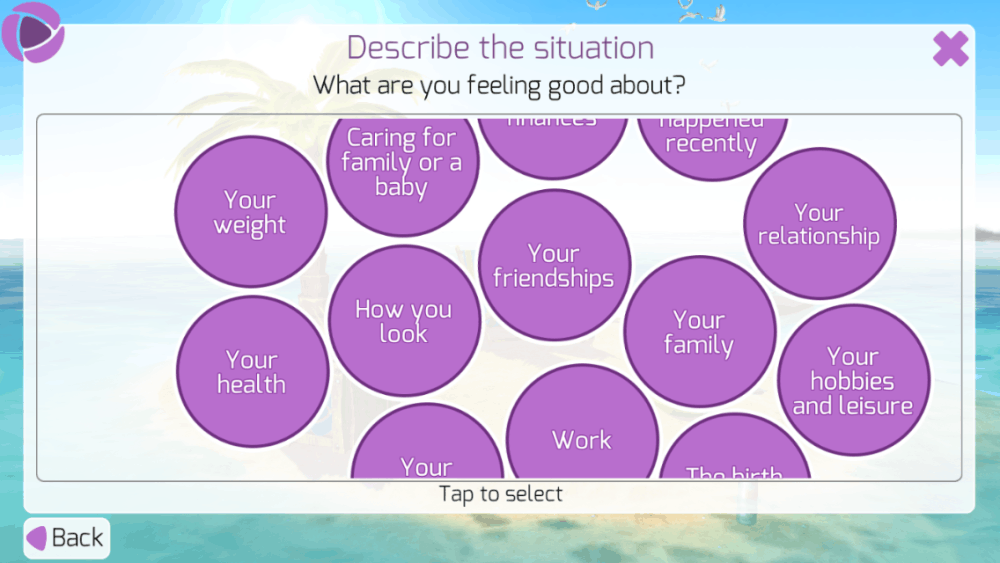
He liked the different “thought bubbles” that asked him questions about his mental health and well-being. He’s not really one to say, “I’m feeling stressed” (is there an 11-year-old boy who is?). But the thought bubbles led him gently through some useful self-inquiry.
I had only one problem with a technical aspect of the app. Several times I was asked if I would like to be reminded of an activity later in the day. When I responded that I would like a reminder alert, I never received one. This bug will likely be fixed in newer versions of the app.
If you’d like to try a month of the Feel Stress Free app for yourself, go to the Thrive: Feel Stress Free website. Click “I have a coupon” and enter: THRIVE1828 Prove to yourself that your cell phone supports mental health!
Let me know what you think about using a mindfulness app. Is it something you’re curious to try?
Disclosure: I was given complimentary access to Thrive’s Feel Stress Free app in exchange for this review. All opinions are given freely.