
Kanban Planning: A Healthy Habit to Adopt
Are you someone who needs structure in your day, but you bristle at the thought of a strict schedule?
Do you have things you need to accomplish every day, but your “go with the flow” personality means nothing is getting done?
I feel you!
As someone who LOVES order but HATES structure, I have a planning tool to share that may be just what you need. Kanban planning has been the only organizational tool that I’ve been able to adopt– and stick with– even when I’m juggling lots of competing priorities.
This post contains affiliate links. As an Amazon Associate I earn from qualifying purchases. Purchasing via these links gives me a small commission at no cost to you. Please see my privacy policy for more information.

What is Kanban Planning?
Very simply, Kanban planning is an organizational system where you divide your to-do list into three distinct parts. A Kanban board allows you to see at a glance:
- everything you need to do,
- what you’re (supposed to be) working on now, and
- what you’ve already accomplished.
Kanban planning works well for people who often feel overwhelmed by a long to-do list, yet they find satisfaction in accomplishment.
(I’m raising my hand high right now!)
Even though I love setting SMART goals, I use Kanban planning to break down the steps to achieve them.
What are the Kanban principles that make it so useful?
Kanban planning was developed in Japan as a way to focus on the flow of a work process. It was developed to be used in Toyota’s manufacturing process. But don’t let that scare you! Kanban principles can be applied to your work or home life, too.
Kanban translates into “visual” (kan) “signal” (ban), meaning that this type of organizational system relies on seeing all the parts of a work process.
When we can see all the parts of what we need to do, our brains can then start to make sense about how to get everything done. This is the first step of Kanban planning– writing out everything you need to do.
Efficiency is another one of the Kanban principles. The way that efficiency is achieved is the second step of the process– having a visual reminder of what you are doing right now.
By limiting work-in-progress, our brains are better able to focus on the task at hand. I’ve long been an advocate of monotasking, recognizing that overloading our brains with options and decisions creates drag. This focus on flow of effort and creating minimal resistance while working are two other aspects of Kanban principles.
Decision fatigue is the condition that we experience when we’re faced with too many choices. Decision fatigue is why the willpower myth exists! As we make more decisions, our ego is depleted of the resources necessary for continuing to make quality decisions. Therefore, if we limit the decisions we make, we have reserves to make better decisions for a longer period of time.
Kanban planning, by eliminating the tendency to multitask, reduces the chances of suffering from decision fatigue. Thus, we improve our efficiency with our work.
And keeping a visual record of what we have already done (Step 3 of Kanban planning), helps to motivate us to keep working. Harvard Business School recognizes the power of small wins to keep us motivated.
(This motivation principle of Kanban is the same one underlying my Drops in the Bucket List activity– but I give you an added dose of gratitude, too!)
Another Kanban principle that I think makes it different than a work schedule or routine is that there is CHOICE involved. You can clearly see all of the tasks that need to be accomplished by the end of a day. But the individual has choice in selecting what to do and when. This is an important point of distinction from most other organizational planning tools.
How to Make a Kanban Board
The good news is, making a Kanban board is super easy! You can do it with a simple piece of paper and three columns:
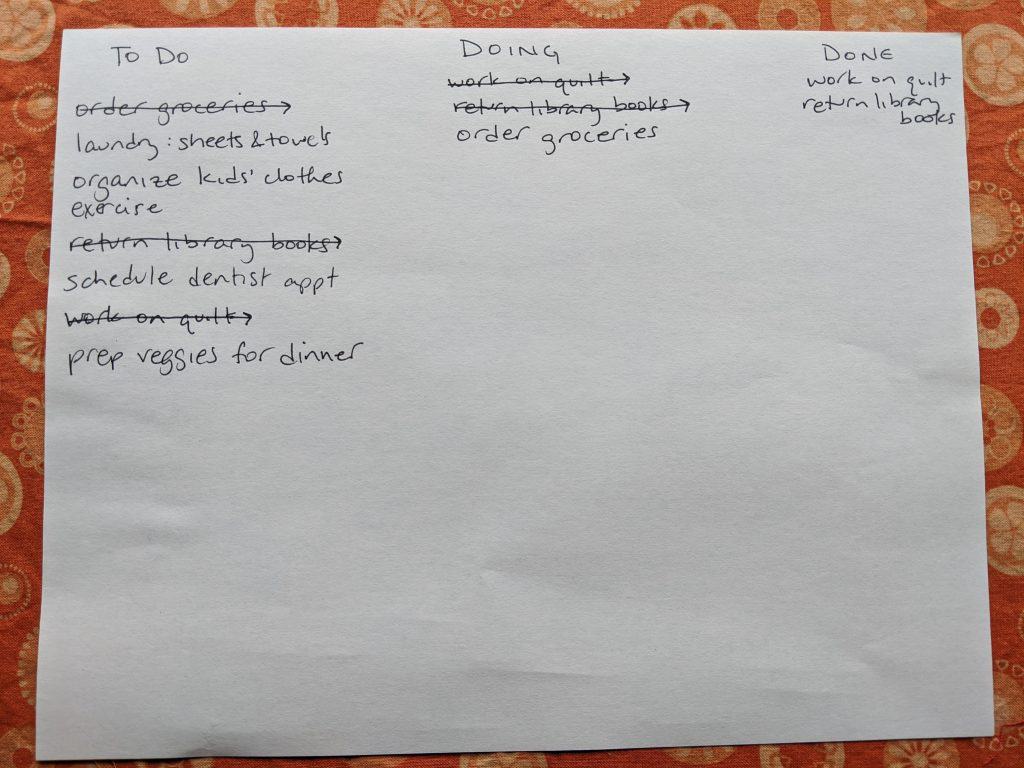
Pen and paper Kanban boards work fine if you have different tasks to do every day (and you like a fresh piece of paper every morning). Once you have a set of repeating activities, though, you’ll want to use one of the next Kanban board examples as inspiration.
To get a little fancier, you can use a piece of posterboard and sticky notes. If you’re trying to manage multiple people’s tasks, I suggest using a large whiteboard and multicolored sticky notes, color-coded to each person’s responsibilities. This makes it easier to see at-a-glance how people are progressing through their activities.
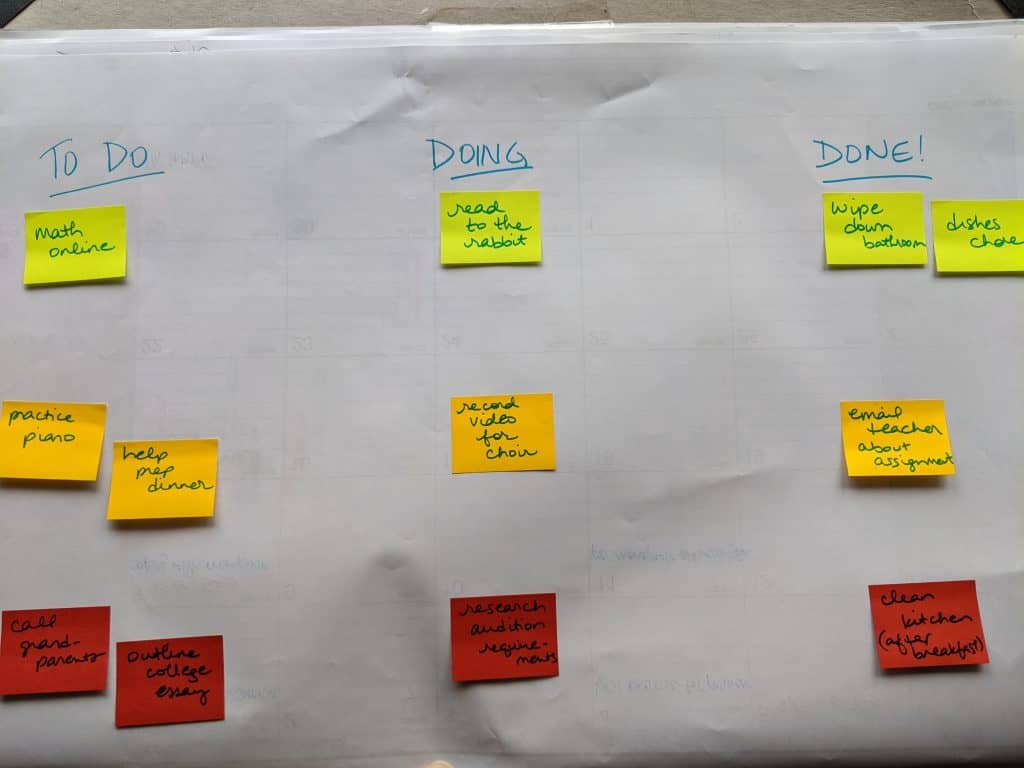
In my family, though, we each need our own Kanban board. (Again, independence of thought and choice in activity is one of the selling points of this system!) We use 11×14 whiteboards with write-on magnets because we have a lot of repeating, everyday tasks. At the end of each day when we discuss what we’ve done, we just move all the magnets back to the TO DO side to get ready for tomorrow.
More Real Life Kanban Board Examples
By teaching this system to my kids early, I hope that they’ll learn that it works well for both work and home projects.
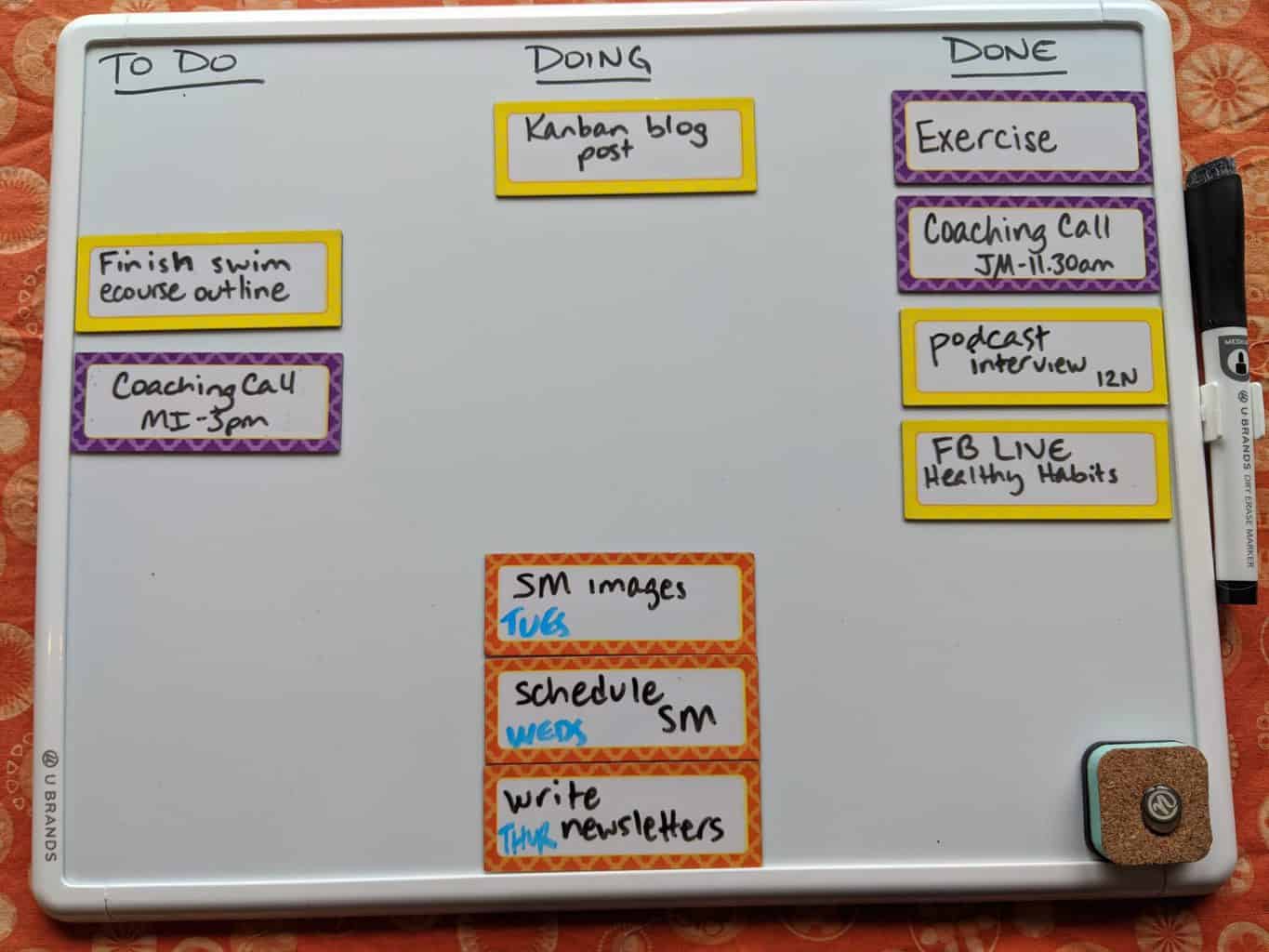
First up is the Kanban board I use in my daily work planning:
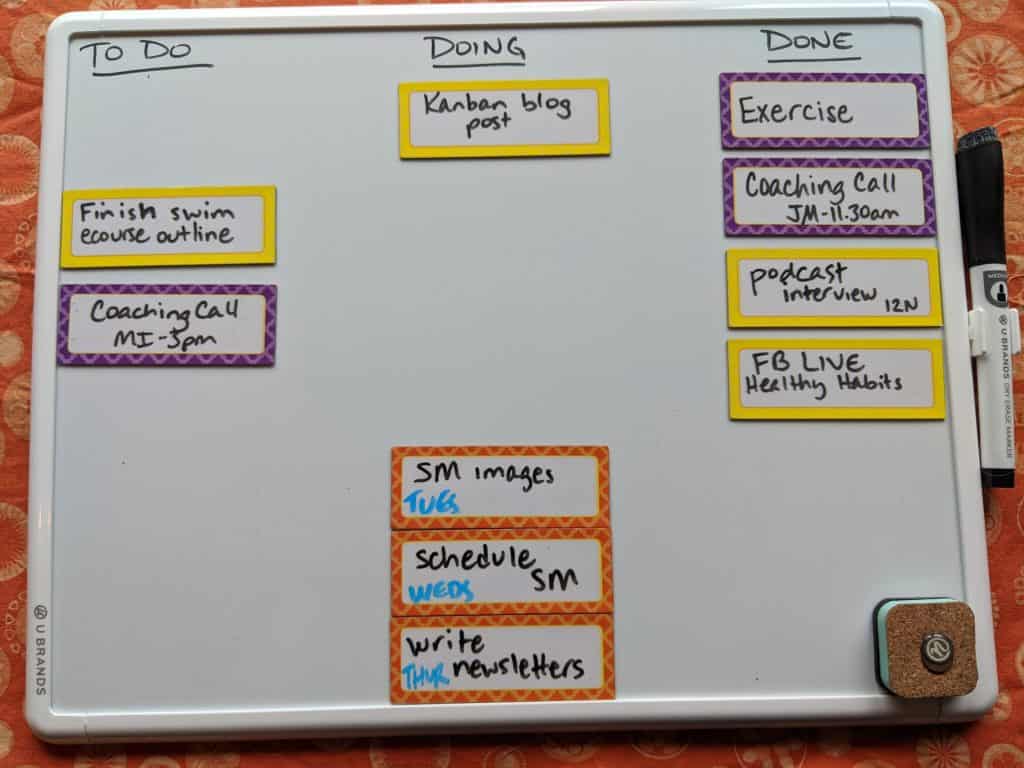
What you see there is even a little fancier than a daily Kanban board needs to be. I’ve added color coding to mine– yellow for tasks specific for today, purple for things that happen daily, and orange for tasks that I batch and do only weekly. The key is that I can easily see my to-do list, what I am doing now, and what I’ve already done.
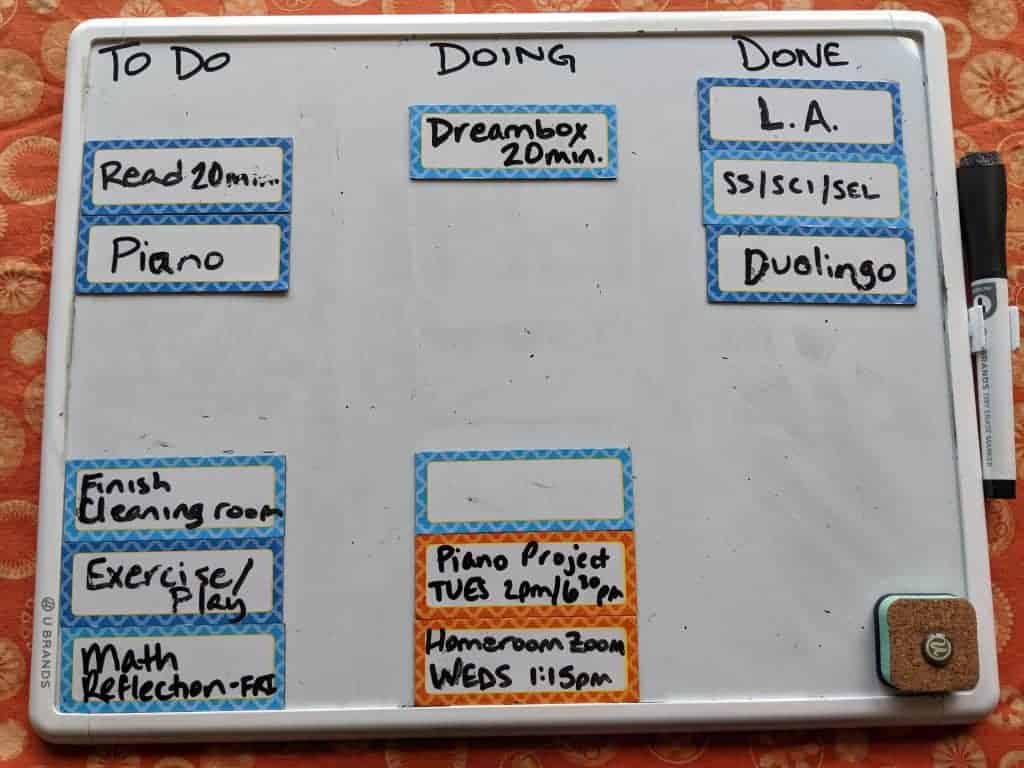
The second Kanban board example is for my middle-school aged son. We are currently under shelter-in-place orders, so this is how we are adding order to his day. Remember above how I talked about the element of CHOICE being important in Kanban planning? That is so essential when trying to motivate a teenager!
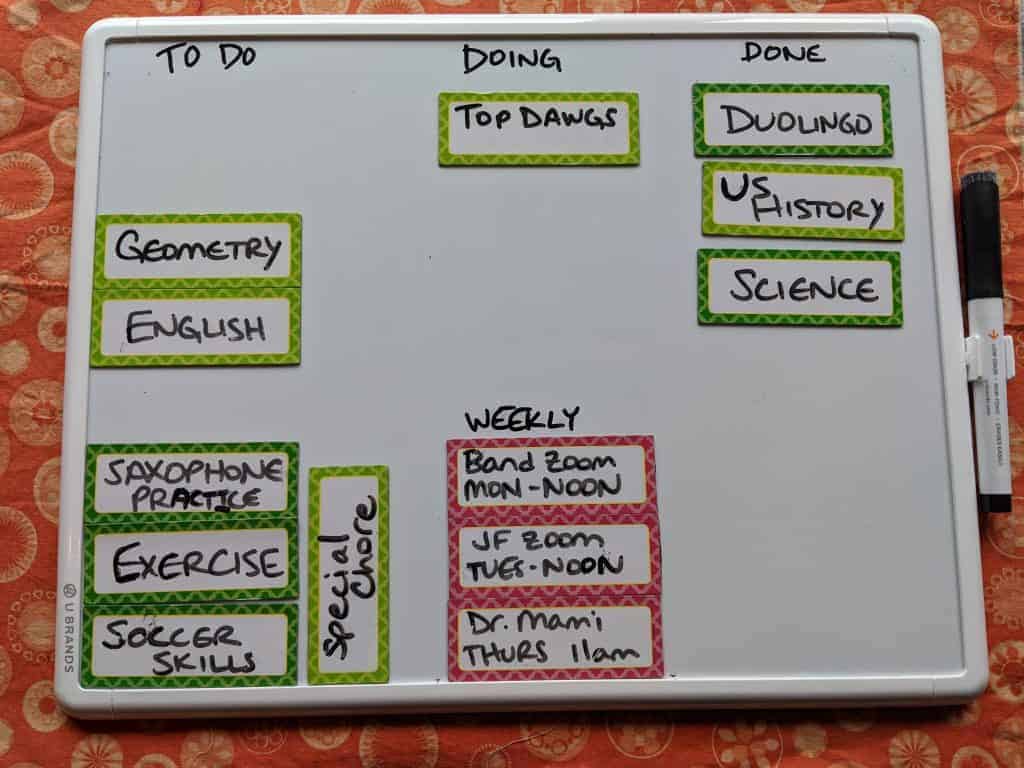
What you see in this Kanban board example are his daily school and home/personal tasks. You’ll notice we’ve also included weekly meetings/activities on a separate color magnet. On the appropriate day, he moves those from the middle of the board to the To Do side. It keeps his tasks easily visible to him, so he’s less likely to forget!
Best of all, he has the freedom to choose what to do when and in what order. I cannot emphasize enough how critical this is for eliminating friction.
Remember that I said minimal resistance is one of the Kanban principles?! It works for emotional friction, too!
Not only does it empower the kids to take responsibility for getting their work done, but this system makes it really easy for me to see quickly what kids are doing without the constant nagging. I’m all for anything that reduces stress levels!
Is there an online Kanban tool or app I can use?
Yes! There are two popular workflow programs that are based on the Kanban planning principles or agile workflow.
If you’ve worked in the corporate world, you’re probably familiar with Asana. Its functionality is based in project management workflows. Because it is a robust system intended for multiple people collaborating on a long-term, complex project, it is probably more than most individuals need. This is especially true if you’re just looking for a way to keep daily life moving at home.
For the creative entrepreneurs and household managers, Trello is extremely popular. Trello is a digital Kanban tool that makes it easy to keep multiple projects moving forward simultaneously. It is more user-friendly than Asana, and it’s purely visual card-based system is a much better approximation of a true Kanban board.
If you’re someone who prefers a digital Kanban tool to a physical one, I’d recommend starting with Trello. It’s much more kid-friendly, if that is important to you.
Happy Kanban planning!
The Well Balanced Women blog is for educational purposes only and is not medical advice. Please discuss your health issues with a licensed medical practitioner.
0 Comments