

Are you one of those women who, despite years of dance and gymnastics lessons growing up, can no longer touch her toes?
You’re not alone.
Flexibility after 40 is a quality-of-life issue for women. While you may not think of it as such, flexibility contributes significantly to being comfortable in your own body.
And while we may not have a reason to show off our splits anymore, flexibility remains a key indicator of wellness. Improving your flexibility after 40 is a worthwhile goal for anyone who wants to improve her health.
This post contains affiliate links. As an Amazon Associate I earn from qualifying purchases. Purchasing via these links gives me a small commission at no cost to you. Please see my privacy policy for more information.
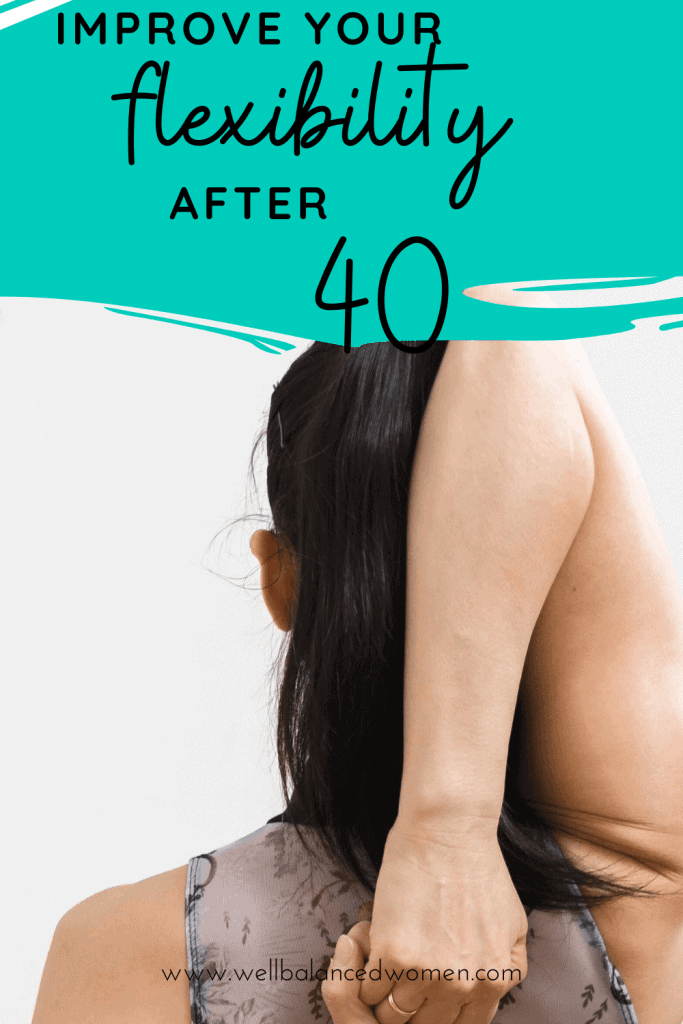
Maintaining flexibility after 40 tracks with injury prevention
Flexibility allows our bodies to perform optimally in both sport-specific situations and everyday tasks.
I’m sure we can all think of a friend who has injured herself while doing some seemingly playful task. Maybe it’s a torn hamstring while kicking the soccer ball around with the kids. Or perhaps it’s a tweaked back from carrying groceries in from the car.
These are the types of injuries that when we were younger we swore we’d never get. And, yet, here we are.
When we lose flexibility, our body is slower to adapt to abrupt changes in movement. We also notice that simple movement patterns– like getting down to the floor and up again after we drop something– are much more challenging.

Why the decline in flexibility after 40?
Is this newfound tendency for injury related to perimenopause? Often, that is the case.
The hormonal rollercoaster of midlife plays tricks on your tendons! As levels of estrogen decline in the body, we lose the suppleness of our youth. Estrogen helps to keep our bodies juicy and well lubricated. So as estrogen declines in midlife, women are more susceptible to muscular and tendon injuries like tears and strains.
Also, our balance tends to decline as we age. So unless we really work to improve flexibility, the combination of hormonal changes and poor balance lead to increased injury risk.

We can’t stop ageing, but we can increase flexibility to improve overall health
In addition to lowering your injury risk, improving your flexibility offers other meaningful health benefits.
Increased flexibility also usually tracks with increased strength. Because your muscles can move through a greater range of motion, you are going to use more of each muscle. Working muscles more completely means every repetition builds more strength. Building and maintaining muscle mass is a key way to keep up your metabolism.
Being more flexible means enduring less daily pain. If your movement patterns make you ache, regular gentle stretching can allieviate that nagging chronic pain. Check out these posture hacks for everyday activities that will decrease repetitive use agony.
Don’t underestimate the positive mental health boost you’ll feel when your chronic pain lessens. When you aren’t so focused on your pain, you have so much more mental energy to put towards something you really want to do! Less pain AND more energy for fun things?? What a win!

Before you go thinking that I mean you have to be doing an hour of yoga every day to increase flexibility, let me stop you right there.
Finding new ways to move your body will improve your flexibility. Think about it: the movement patterns you use in swimming are different from those used in tennis and different again from those used in walking. Each of these movement patterns challenges your body in a new way, forcing it to adapt.
And one of these adaptations is increased flexibility.
If you’ve been looking for a reason to try a new fitness program or finally check out that dance class that looks like so much fun, you should! Building new muscle patterns boosts your flexibility and overall health.
Your flexibility routine can be quick and simple. Stretches for flexibility include everyday movements such as:
- roll your shoulders back 5 times every time you sit down (take some deep breaths while you do it, just because it feels good)
- wake up your ankles by drawing the alphabet in the air with your toes while you’re on a call at work
- stretch the back of your body by tying your shoes standing up, bending your knees as necessary (this bend will decrease over time)
- open your chest by draping your arms over the back of the couch as you’re bingeing on Netflix
- sneak in a little body contact with your surly teenager by holding on to his shoulder so you can balance as you stretch your quad by bending a knee back and grabbing the top of the foot
Flexibility is a “use it or lose it” kind of thing. But the good news is that even if you’ve lost it, you can improve flexibility again just by doing simple stretching regularly. What ways can you sneak a little more stretching into your everyday life?

What equipment do I need to improve my flexibility in midlife?
One of the best things about improving your flexibility is that you don’t need a ton of fancy equipment. Having simple home gym essentials is really all you need. These are my four favorites for flexibility:
That’s it! And even if you don’t have any of that equipment, as long as you have a soft spot to sit or lie down, you can get stretching!
Not sure where to start with improving your flexibility? Check out my favorite flexibility routine, a supine stretching sequence:
Loosening and lengthening your muscles just feels so good!
So rather than rushing through the end of your next workout, take a few minutes to enjoy some stretching. You’ll be surprised how just a few minutes of simple stretching regularly delivers all the benefits increased flexibility offers.

What else contributes to flexibility after 40?
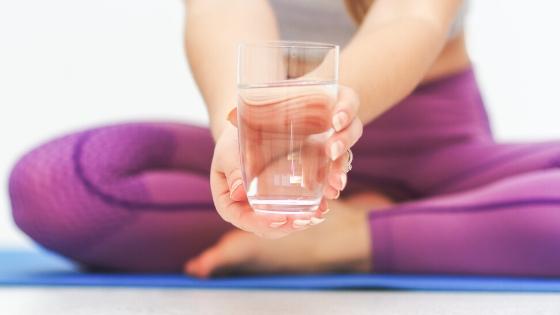
Hydration is a big contributor to flexibility. If your body isn’t well hydrated, your muscles aren’t going to move as smoothly. These are muscles that are prone to strain. When the muscles strain, you feel pain.
Being well hydrated keeps the muscles supple and ready to stretch. Easy as that.
(And you already know why women over 40 need muscle, right? Well done!)
So grab your favorite water bottle, fill it up, and make sure you’re getting plenty of water all throughout the day.
The combination of stretching and hydration will leave your body feeling agile, supple, and fabulous!

Karen Shopoff Rooff is an ACE certified health coach. The Well Balanced Women blog is for educational purposes only and is not medical advice. Please discuss your health issues with a licensed medical practitioner.
