

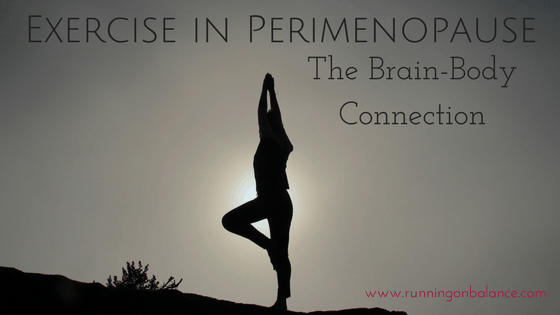
Have you noticed that as you get older, you feel less competitive?
Many women don’t realize that the loss of competitive drive is linked to the declining hormone levels that come with midlife. As our bodies encourage us to turn inward and become more reflective, it is only natural that perimenopause exercise choices reflect that change.
This post contains affiliate links. Purchasing via these links gives me a small commission at no cost to you. Please see my privacy policy for more information.
When we allow ourselves the freedom to stop competing and proving our worth through our bodies, we open up the opportunity to use exercise as a way to connect our body and brain. For many women, it’s a radical but rewarding shift.
Slow, intentional movement can build the connection between your brain and your body. Exercise is known to deliver benefits both physical and psychological. Finding the type of workout that appeals to you to support both elements is a fun personal investigation.
Why should women in perimenopause exercise?
For women who are juggling the multiple priorities of work, family life, and caretaking for elderly parents, exercise is a great stress reliever. Inserting some intentional movement with deep breathing into your workout plans has immediate physiological benefits. Deeper breathing and moving your muscles through a large range-of-motion helps create flow and ease in your body.
Even better, this slower paced, less intense movement can be understood as an effective self-care practice. It helps to reduce stress naturally, and it allows you to create space in your day to take care of your body. By practicing the self-care of movement and breath, you can reduce the anxiety that often rises in midlife women.
Yoga is the Perimenopause Exercise Poster Child
One of the best studied forms of perimeopause exercise is yoga. Physical benefits include increased flexibility and strength, both of which are important for mobility and bone health. Flexibility after 40 is something we have to work to maintain, but the health benefits are worth it.
Psychological benefits of a regular yoga practice include improved mood and mental clarity. Positive effects of hatha yoga are both physical and psychological, and it’s something almost anyone can do right from home.
Yoga nidra or restorative yoga are two forms of perimenopause exercise that can help lower stress levels. By holding postures for a longer period of time, the nervous system calms down and recalibrates. And with lower stress levels come less of the stress hormone cortisol. When cortisol is lower and steadier, there is less abdominal weight gain, greater mental clarity, and a better sense of emotional balance. This psychological boost has meaningful physical effects.
Restorative yoga offers physical benefits as well. I have yet to meet a woman who doesn’t have tight shoulders or a sometimes-sore lower back. In restorative yoga, bodies are arranged in carefully aligned postures and held for several minutes. When combined with deep breathing and mental release, the muscles release their grip. Many women find profound release and relief through restorative yoga.
Aqua yoga also offers intentional movement coordinated with the breath. With the added benefit of hydrostatic pressure to calm the nervous system and lower blood pressure, aqua yoga also offers perimenopausal women the opportunity to move their body in a supported way.
What type of exercise is right for me during perimenopause?
Finding the balance between high intensity exercise and meditative movement is part of the perimenopause puzzle. While you need to rev up your heartrate for cardiovascular fitness, going long on the treadmill day after day is not the best option for women in hormonal change. Your body can interpret this exercise-induced stress as a trigger to produce cortisol.
Because cortisol is a hormone that tells the body to store fat around the middle (to turn in to quick energy), we do not need more! In fact, finding ways to lower cortisol naturally is something most perimenopausal women want.
Instead, you may find that a short but intense workout (like an interval workout) one day and a slow, meditative yoga session another day helps to balance your hormones.
Whatever way you choose to move your body, your muscles, your nervous system, and your brain will thank you.
After all, the body and the brain (and the spirit) really are all connected!
